Table of Contents
Introduction
If you’ve ever worn traditional latex gloves and noticed a white, chalky residue on your hands after removing them, you’ve encountered glove powder. This substance has been a standard feature in disposable gloves for decades, but many people wonder what exactly it is and why it’s used. Understanding the composition and purpose of glove powder is essential for making informed decisions about hand protection in medical, industrial, and food service settings.
What is the Powder in Latex Gloves?
The powder found inside latex gloves is typically cornstarch, a natural, plant-based powder derived from corn kernels. Cornstarch replaced earlier powdering agents and has become the industry standard due to its safety profile and effectiveness.
Before cornstarch became the preferred option, manufacturers used other powders including:
Talc: Once commonly used, talc was eventually phased out due to health concerns related to respiratory issues and potential contamination risks in medical and food environments.
Lycopodium: This spore-based powder from club moss plants was used in early glove manufacturing but has been largely discontinued.
Today, medical-grade cornstarch is the primary powdering agent used in latex gloves. It’s bioabsorbable, relatively inert, and considered safe for most applications, though it’s not without controversy, as we’ll explore later in this article.
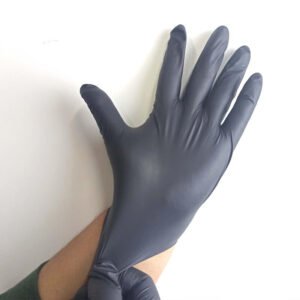
Purpose and Functions of Glove Powder
The powder in latex gloves serves several important functions that facilitate both manufacturing and user experience:
Easier Donning: The primary purpose of glove powder is to make gloves easier to put on, especially when hands are damp or sweaty. The powder acts as a lubricant, allowing the glove to slide smoothly over the skin.
Moisture Absorption: Cornstarch absorbs perspiration inside the glove, keeping hands drier and more comfortable during extended wear. This is particularly valuable in medical procedures or industrial tasks that require prolonged glove use.
Manufacturing Benefits: During production, powder prevents the inner surfaces of latex gloves from sticking together. This facilitates the stripping process when gloves are removed from their molds and makes packaging and storage more efficient.
Reduced Tackiness: Natural rubber latex has an inherently sticky surface. Powder reduces this tackiness, making the gloves more comfortable and easier to handle.
The History of Powdered Gloves
Powdered gloves have a long history dating back to the early days of medical glove manufacturing. When disposable surgical gloves were first introduced in the late 19th and early 20th centuries, they were notoriously difficult to don, especially in emergency situations.
Manufacturers began experimenting with various powders to solve this problem. Talcum powder was initially popular, but by the 1940s and 1950s, concerns about talc’s safety led to the adoption of cornstarch as the preferred alternative. For decades, powdered latex gloves remained the standard in healthcare, food service, and many industrial applications.
The convenience of powdered gloves made them ubiquitous, with billions produced and used worldwide each year. However, beginning in the 1990s, growing awareness of potential health risks associated with powder began to shift industry practices and regulations.
Health Concerns and Controversies
While cornstarch powder in latex gloves is generally considered safe, several health concerns have emerged over the years:
Respiratory Issues: When gloves are donned or removed, powder particles become airborne and can be inhaled. For healthcare workers and others who frequently use powdered gloves, repeated exposure may cause respiratory irritation or contribute to respiratory conditions.
Latex Allergy Complications: Research has shown that powder can absorb latex proteins from the glove material and carry them into the air. This airborne latex protein can trigger or worsen latex allergies, causing reactions ranging from skin irritation to severe respiratory symptoms or anaphylaxis in sensitive individuals.
Wound Contamination: In surgical settings, powder particles can contaminate open wounds, potentially leading to complications such as granulomas, adhesions, or delayed healing.
Cross-Contamination: In food processing and preparation environments, glove powder can contaminate food products, which is undesirable from both quality and allergen-management perspectives.
These concerns led the U.S. Food and Drug Administration (FDA) to ban powdered surgical and examination gloves in 2016, a decision followed by similar regulations in other countries. This regulatory shift has dramatically increased the production and use of powder-free latex gloves.
Powdered vs. Powder-Free Latex Gloves
Understanding the differences between powdered and powder-free latex gloves helps users select the appropriate option for their needs:
Powdered Latex Gloves:
These gloves contain cornstarch powder and are generally easier to don, especially with damp hands. They’re more affordable due to simpler manufacturing processes. However, they’re increasingly restricted in medical settings and may not be suitable for individuals with latex sensitivities or in environments where contamination is a concern.
Powder-Free Latex Gloves:
These gloves undergo additional processing to create a smoother inner surface without powder. They’re treated with polymer coatings or undergo chlorination to reduce tackiness. While slightly more expensive, powder-free latex gloves eliminate the health risks associated with powder, reduce airborne allergen exposure, and are now the standard in healthcare settings worldwide.
The performance characteristics of powder-free gloves have improved significantly, making them nearly as easy to don as their powdered counterparts while offering enhanced safety profiles.
How Powder is Applied in Manufacturing
For powdered latex gloves, the application of cornstarch occurs during the manufacturing process, typically after the gloves have been formed and cured on ceramic or metal hand molds.
The powdering process generally includes these steps:
Initial Dipping: Hand-shaped formers are dipped into liquid latex compound to create the glove shape.
Curing: The latex-coated formers pass through ovens where heat vulcanizes the rubber, giving it strength and elasticity.
Powder Application: The gloves, still on their formers, pass through a chamber where cornstarch powder is applied to the interior surface. This can be done through tumbling, dusting, or other mechanical methods.
Stripping: Once powdered, the gloves are mechanically stripped from their formers, with the powder facilitating easy release.
Quality Control and Packaging: Gloves are inspected for defects and then packaged for distribution.
Modern glove dipping machines can be configured for either powdered or powder-free production, allowing manufacturers to meet diverse market demands efficiently.
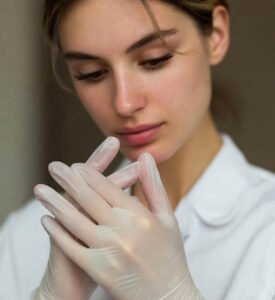
Modern Alternatives to Powder
As the industry has moved away from powdered latex gloves, several innovative alternatives have been developed:
Chlorination: This chemical treatment modifies the glove’s inner surface, making it smoother and less tacky without powder. Chlorinated gloves are easy to don and have become very popular in medical settings.
Polymer Coating: A thin layer of polymer is applied to the inner surface of the glove, creating a slippery surface that facilitates donning. This method is widely used in high-quality powder-free latex gloves.
Silicone Treatment: Some manufacturers apply silicone-based treatments to create a low-friction interior surface.
Hydrogel Coating: Advanced hydrogel technologies create a moisturizing, friction-reducing inner layer that makes donning comfortable even without powder.
These alternatives have made powder-free latex gloves highly functional and user-friendly while eliminating the health and contamination concerns associated with powder.
Conclusion
The powder in latex gloves is typically cornstarch, a substance that has facilitated glove use for decades by making them easier to don and more comfortable to wear. While powdered gloves served an important purpose in medical and industrial history, growing awareness of health concerns has driven the industry toward powder-free alternatives.
Today, powder-free latex gloves dominate the healthcare market and are increasingly preferred in other sectors as well. Advanced manufacturing techniques have created powder-free gloves that rival or exceed the performance of traditional powdered versions while offering superior safety profiles.
Whether you’re a healthcare professional, food service worker, or industrial employee, understanding the role of powder in gloves helps you make informed choices about hand protection. As regulations continue to evolve and technology advances, the future of latex gloves lies in powder-free innovations that prioritize both functionality and user safety.
Advanced Glove Manufacturing Solutions
We are a professional glove machine manufacturer specializing in state-of-the-art equipment for both powdered and powder-free latex glove production. Our advanced machinery incorporates the latest technology for chlorination, polymer coating, and quality control, ensuring your gloves meet the highest international standards. Whether you’re transitioning to powder-free production or establishing a new manufacturing line, our comprehensive solutions deliver reliability, efficiency, and superior product quality.
Contact us today to discover how our glove dipping machine technology can elevate your manufacturing capabilities.